
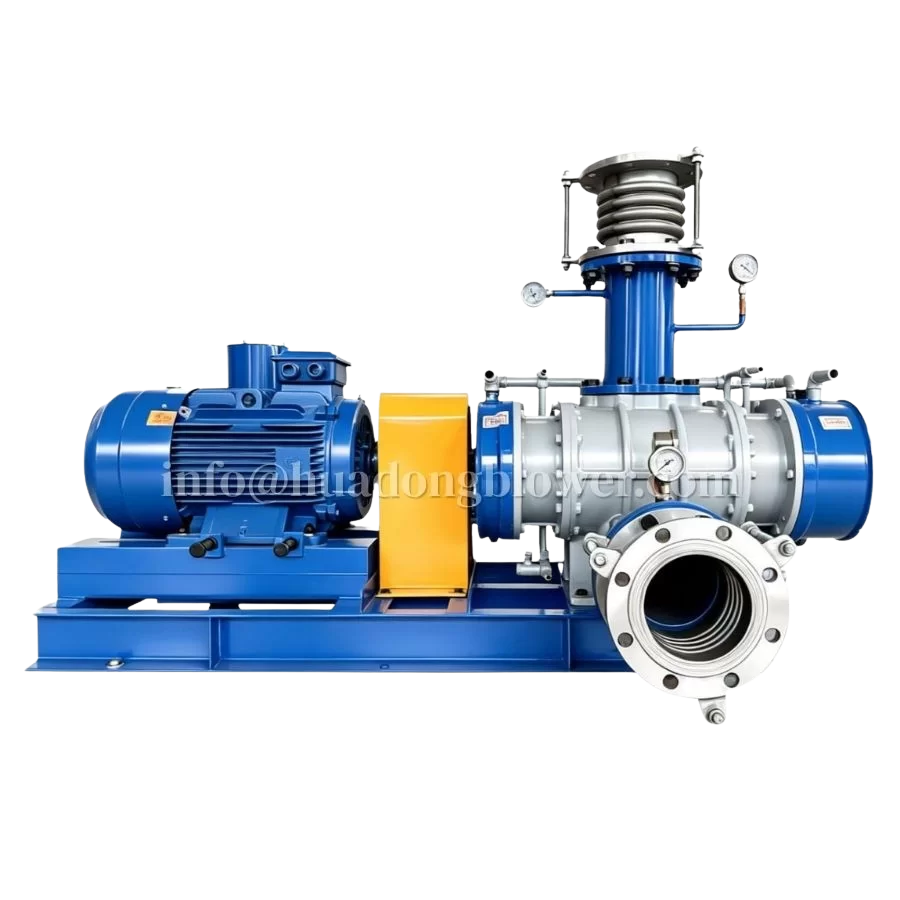









Correct screw blower sizing is critical in chemical processing plants.
An undersized blower causes unstable airflow and poor process control.
An oversized unit wastes energy and increases costs.
Prope sizing ensures safe operation, consistent performance, and long equipment life.
Why Accurate Sizing Matters
Chmical processes often run continuously and under strict control.
Airflow and pressure must remain stable.
Incorrect blower size leads to pressure fluctuations and frequent adjustments.
This increases energy use and maintenance risks.
Key Parameters for Screw Blower Sizing
1. Required Airflow
Airflow is the first sizing factor.
It is usually defined by the process design.
Chemical reactors, oxidation units, and stripping columns all have specific airflow needs.
Always consider maximum and minimum demand.
2. Operating Pressure
Discharge pressure depends on system resistance.
This includes piping losses, filters, valves, and reactors.
Safety margins must be included to handle process changes.
3. Gas Properties
Chemical processing may involve air, nitrogen, or process gases.
Gas temperature, density, and composition affect blower performance.
These values must be confirmed before final selection.
4. Operating Duty
Some systems run 24/7. Others operate in batches.
Continuous duty requires robust designs and proper cooling.
Duty cycle affects motor size and thermal design.
5. Control Strategy
Variable speed control allows better matching of airflow to process demand.
This improves energy efficiency and reduces mechanical stress.
Control range should be considered during sizing.
Common Sizing Mistakes
One common mistake is oversizing for safety.
This leads to inefficient part-load operation.
Another issue is ignoring future capacity changes.
Poor understanding of system losses also causes selection errors.
Sizing for Energy Efficiency
Selecting the correct operating point is essential.
Screw blowers are most efficient within a specific pressure and flow range.
Matching the blower curve to actual process conditions reduces kW per unit of airflow.
Application Examples in Chemical Processing
Screw blowers are widely used in:
Oxidation and aeration processes
Gas stripping and desorption systems
Chemical drying operations
Pneumatic conveying of powders
Reactor purge and inert gas supply
Each application requires careful evaluation of flow and pressure.
Conclusion
Proper screw blower sizing is a key step in chemical plant design and upgrades.
It ensures stable operation, low energy use, and long service life.
By focusing on accurate data and realistic operating conditions, plants can achieve reliable and efficient blower performance.


 Scan to follow


